How to Journal (and ticket links)
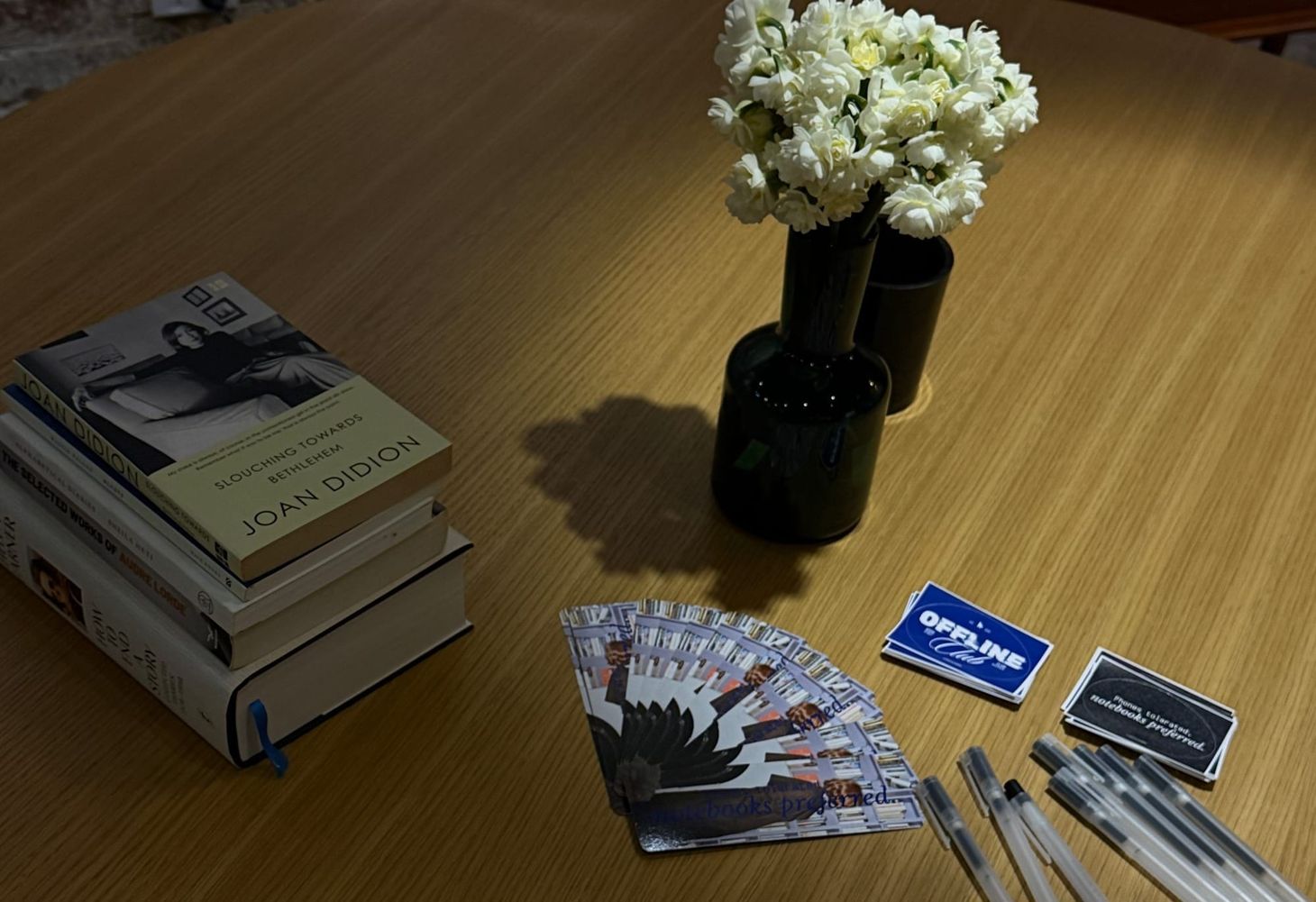
Ticket links for September’s Offline Book Club Events:
- Silent Reading: Wednesday 9 September
- Silent Reading: Tuesday 15 September
- Offline Book Club: Fruit Fly (again) Tuesday 22 September
- Silent Reading: Wednesday 30 September
FYI: If you have tickets for either of the Good Intentions sessions and can no longer make it, you can list your ticket for resale and if someone purchases it you will be reimbursed. Instructions here.
Now onto the newsletter:
I have written at length about why you should journal. If you were looking for more guidance on how, read on.
Last week, I ran an Offline Book Club journalling workshop. For half the time, I explained my own system, quoted Joan Didion, and provided some tips and exercises. For the remainder, we all worked on our own journals then reconvened at the end to discuss progress. Below, I’ve included most of the content and some reflections on things attendees asked or mentioned.
Types of journalling:
- Standard expositional journalling – the ‘who what where and why’ version that you may have done in school exercises. This is a good way to start and build a daily habit, but journalling can be so much more than that!
- Feelings journalling – the cathartic type. Setting aside time to understand how you feel and why. It may start with some other mindfulness exercise or be part of your broader toolkit. Can help name and process emotions and start to move through them.
- Reactive journalling – writing in response to something you’ve read, seen, heard etc naming what it made you feel or think about or what you think or feel about it. For me, this features lots of intertextual references (either explicit in the material or connected by me) and may end up in my review or an essay later. I do this for films, books, or take my journal to the art gallery and walk around until something prompts me to write.
- Thesis journalling – this is a combination of the preceding three. I pick a thought or belief that I have and interrogate why I believe it, where it has come from, what the alternative explanations are, how my own existing context may influence my response to it. This is the way the newsletters start. Often in response to something I’ve seen a lot of people talk about or an angle to an existing conversation I haven’t seen examined yet.
- Goals journalling – committing short- and long-term goals to paper and making plans to achieve them. I do this yearly, quarterly, and monthly. Yearly are the big-ticket items that I want to tackle across the year, quarterly is about operationalising those, and monthly are little things I want to keep an eye on to make life more enjoyable. I note what I want to read, do, see, and achieve (books, films, art exhibits, different places, friends etc)
- Commonplace journalling – just a fancy name for a notebook where you jot anything down that you’re thinking about or need to remember. Basically, the notes app before we had the notes app. Includes quick notes, quotes, definitions, to-do lists etc.
- Visual journalling – using photos, drawings, watercolours, or collage to represent whatever you would like. Not my forte because words are my whole thing, but they are beautiful and lots of people love them!
This content is for Paid Members
Unlock full access to make obsolete after reading and see the entire library of members-only content.
SubscribeAlready have an account? Log in